
KARATE CLUB
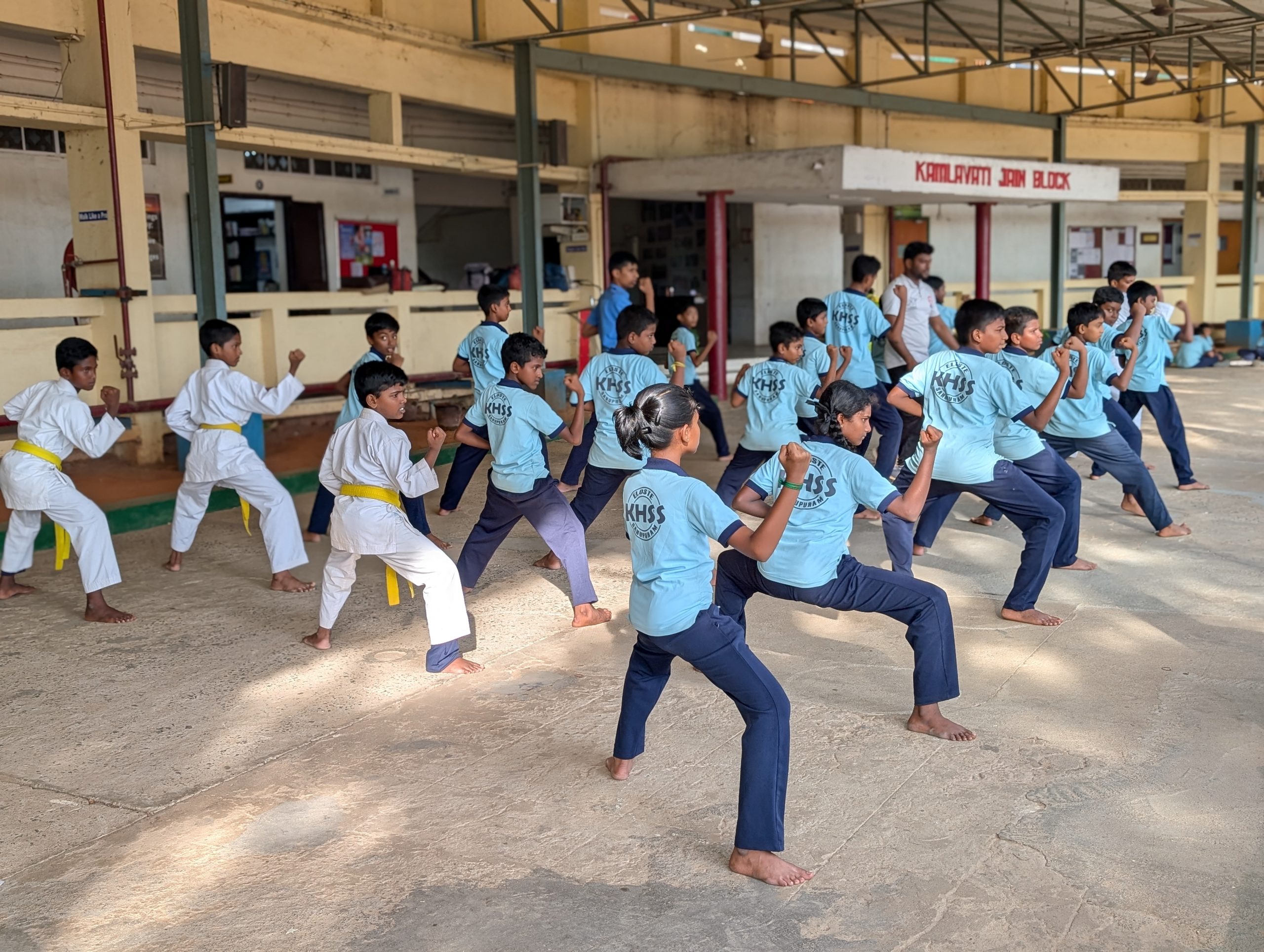
AIM
To develop students’ physical fitness, self-defense skills, discipline, and confidence through systematic karate training.
OBJECTIVES
- Teach basic to advanced karate techniques.
- Develop self-defense awareness and safety skills.
- Improve fitness, flexibility, balance, and coordination.
- Instill discipline, respect, and self-control.
- Enhance concentration and mental strength.
- Encourage regular practice.
- Prepare students for belt exams and competitions.
LEARNING OUTCOMES
- Demonstrate stances, punches, kicks, and blocks.
- Apply self-defense techniques in real life.
- Show improved fitness and stamina.
- Exhibit discipline and confidence.
- Perform basic katas (forms).
- Participate in competitions confidently.
- Maintain focus and emotional control.
GOALS
- Conduct weekly karate classes.
- Ensure skill progression (basic to advanced).
- Encourage full student participation.
- Prepare for belt grading exams.
- Organize demonstrations and competitions.
- Improve overall fitness and discipline.
CLASS PLANNING
Duration: 40–60 minutes
1. Warm-Up (10–15 mins)
- Jogging / spot running
- Stretching exercises
- Fitness drills
2. Basic Techniques (10–15 mins)
- Stances (horse, front)
- Punches (straight punch)
- Blocks (upward, downward)
- Kicks (front kick)
3. Skill Development (10–15 mins)
- Combination movements
- Partner practice
- Self-defense basics
4. Kata Practice (5–10 mins)
- Practice basic forms
- Step-by-step repetition
5. Cool Down (5 mins)
- Breathing exercises
- Light stretching
6. Feedback (2–3 mins)
- Instructor feedback
- Student reflection
PROGRESSION PLAN
Month 1–2 (Beginner)
- Basic techniques
- Discipline rules
- Intro to self-defense
Month 3–4 (Intermediate)
- Combination techniques
- Kata practice
- Flexibility improvement
Month 5–6 (Advanced Beginner)
- Advanced kicks and blocks
- Full kata
- Mock belt test
ASSESSMENT METHODS
- Technique and posture observation
- Participation and discipline
- Performance in practice
- Belt grading tests